Delivering inclusive and accessible education and support
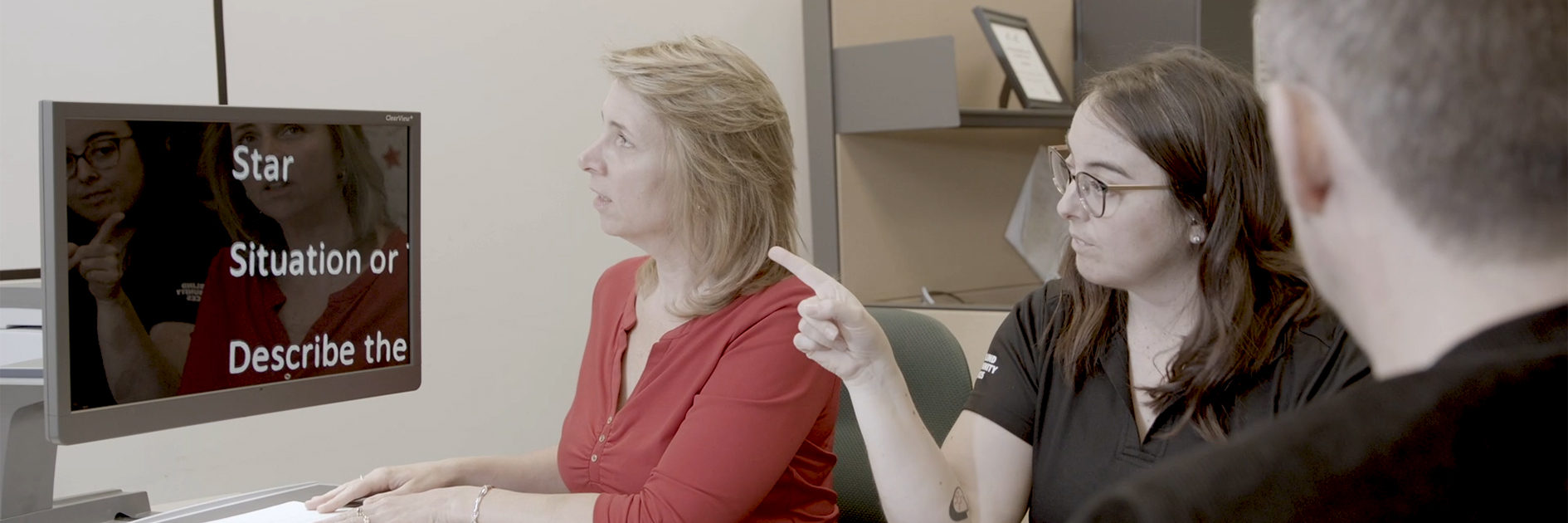
Available to clients in Ontario, DBCS’s Skills Development Program provides inclusive literacy and basic skills instruction for adults who are blind, Deafblind, or have low vision in Ontario. Learners are placed in one-on-one or small group settings and are able to address a wide variety of learning goals, including employment, apprenticeship, post-secondary education, secondary school credits, and everyday skills that lead to greater independence.
The program operates year-round, features flexible scheduling, and is conducted using the student’s preferred communication method(s) to ensure an inclusive and accessible experience for all participants.
Client Charter
Apply for the Skills Development Program

This Employment Ontario project is funded in part by the Government of Canada and the Government of Ontario.
Learning Goals
DBCS’s Skills Development Instructors connect one-on-one with clients to develop a customized plan that helps meet their personal learning goals. Wondering what kind of goals you can work on? Check out the learning goals section to get started.
Your goals. Your way.
When it comes to selecting a goal to work towards, the choice is yours.
DBCS’s instructors will connect one-on-one with clients to develop a customized plan that helps maximize their learning experience, and help them meet their personal goals. Not sure where to start? Here are a few examples of student-led goals that might help you get started on your learning journey.

- Boost confidence and improve understanding of numbers in daily life.
- Compare prices in store flyers, calculate tax and tips at restaurants, and create budgets.

- Build confidence in filling out forms, creating documents, making lists, and writing resumes or cover letters.
- Enhance communication skills for interviews, presentations, and everyday conversations with friends, family, and community members.
- Learn to create documents, browse and shop online, and use social media.
- Use smartphone or tablet features like connecting Bluetooth hearing aids/headphones/speakers, Siri/Google, VoiceOver/TalkBack, and Magnifier.
- Explore apps such as text messaging, FaceTime, Seeing AI, Glide, and Audiobooks.
- Utilize accessibility software on computers or laptops, including JAWS, ZoomText, Magnifier, Narrator, and NVDA.

- Set goals, manage time, organize schedules, and develop problem-solving skills.
- Build teamwork and engagement skills.
- Resolve conflicts, communicate effectively, and practice active listening.

- Read and understand documents, medication labels, mail, recipes, and more.
Have a question about our Skills Development Services? Visit our frequently asked questions section to find an answer fast.